

Educational Posters at Home: The Complete Parent's Guide
Why a poster on the wall really makes a difference
Have you ever wondered why your child remembers the name of a dinosaur they saw only once in a book, but forgets a lesson repeated ten times at the dinner table? The answer lies in two words: visual memory. Psychologist Allan Paivio demonstrated with his dual-coding theory that the brain encodes information much better when it is simultaneously associated with a word AND an image. Concretely, an educational poster hung on the wall works for your child even when you do nothing.
A child's visual environment is not neutral. A room dotted with educational supports stimulates what is called passive curiosity: the child learns through simple repeated exposure, without conscious effort. It's subtle, it's natural, and it's incredibly effective.
Three concrete benefits consistently emerge: enhanced memorization, curiosity naturally stimulated by a well-designed educational environment, and progressive autonomy (the child consults their learning poster independently without waiting for an adult). It's not a decorative gadget. It's an everyday tool. This guide helps you choose the right poster according to age, space, and objective.
Which poster for which age: the reference chart
There is no universal poster. What captivates an 18-month-old can bore a 7-year-old. Here's how to adapt your choice.
From 0 to 3 years old: sensory awakening. At this age, the child is attracted to bright colors, simple shapes, and animal illustrations. Prioritize posters with little text, large and contrasting visuals. A dinosaur poster or a poster with vividly colored animal illustrations will be perfect. No need for complex content: visual stimulation is enough.
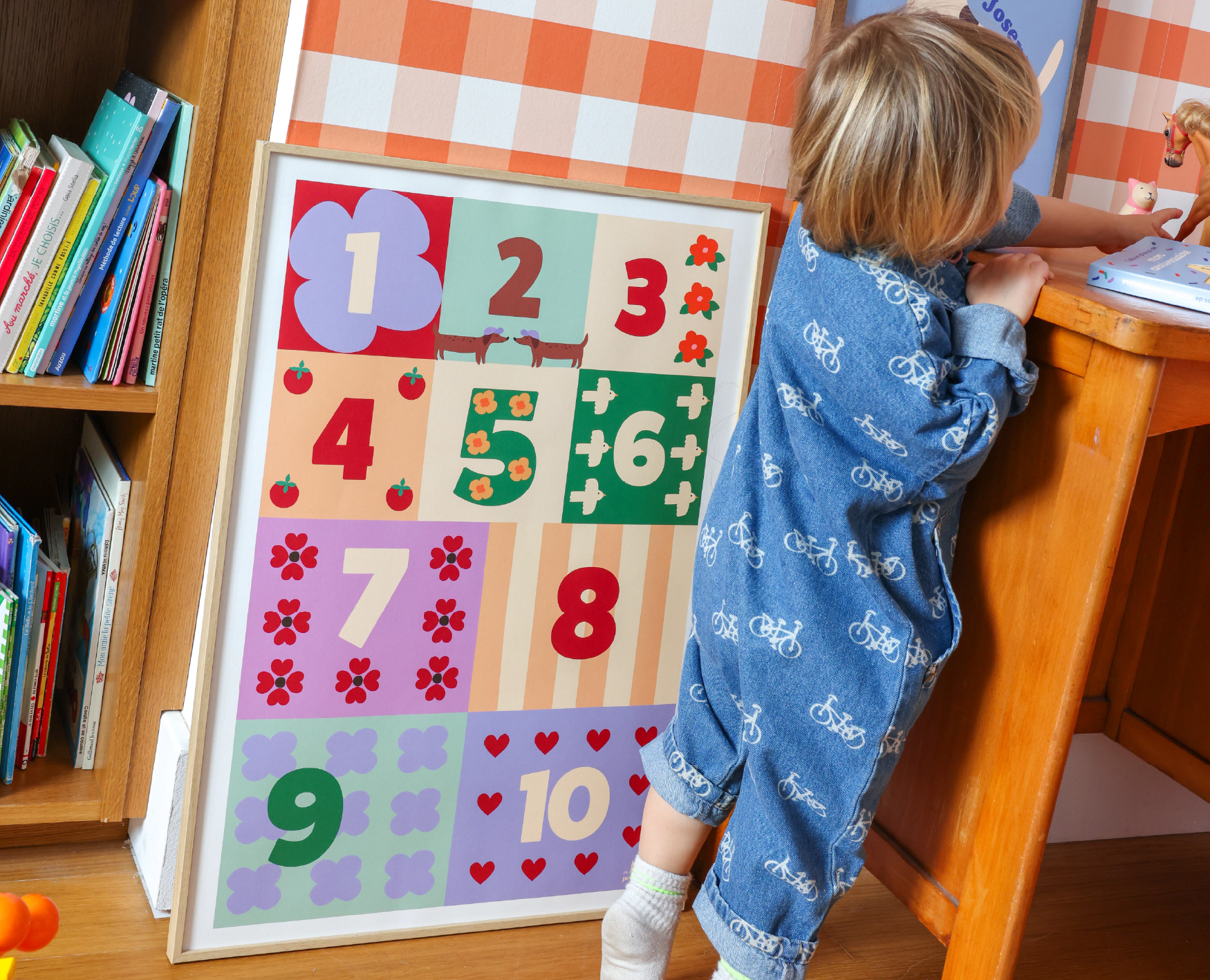
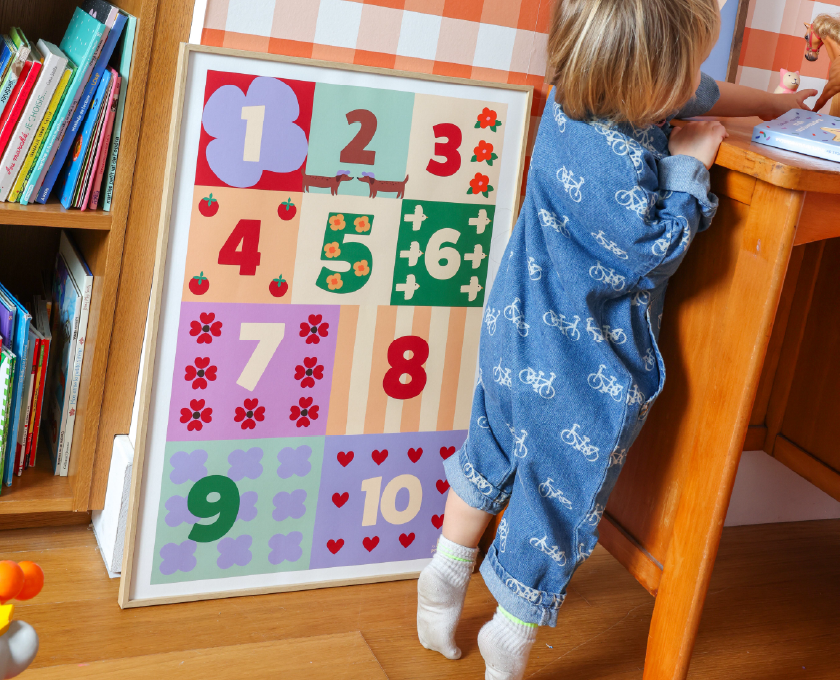
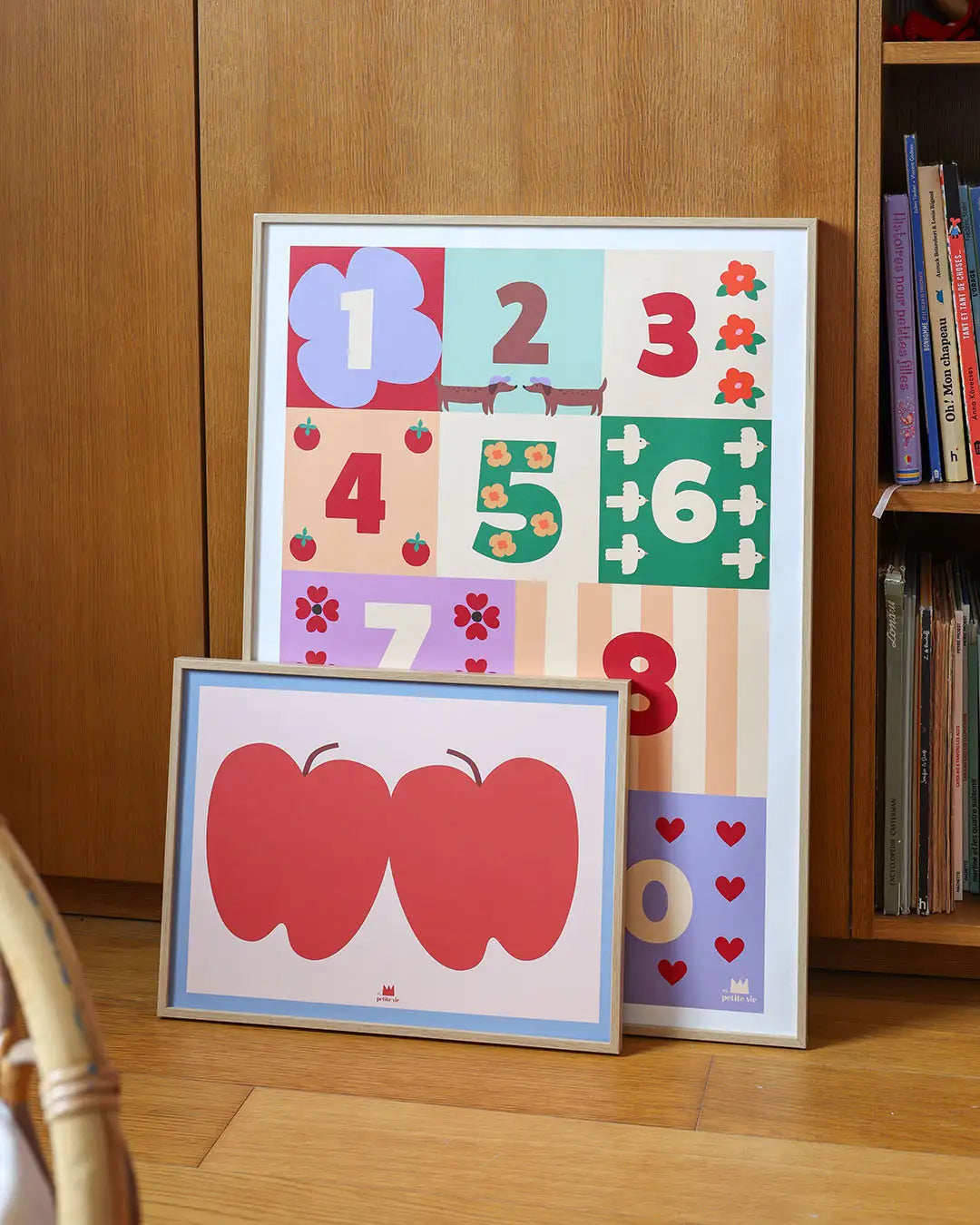
From 3 to 6 years old: pre-reading and first numbers. This is the ideal age for an alphabet chart. The child begins to recognize letters, they can point, sing the alphabet while looking at the poster. The large Alphabet poster from the MA petite vie collection (30x40 cm format) is perfect here: legible, beautifully illustrated, suitable for children's educational decor. A numbers poster is naturally associated with it to cover the two fundamental learnings of kindergarten.
From 6 to 10 years old: deepening and autonomy. The child can now use a poster as an active reference. Multiplication tables or named and classified dinosaurs become real school tools. The 30x40 cm format remains ideal: legible from the desk without cluttering the room. This is where the educational poster truly makes sense.
Where to hang posters: bedroom, hallway, or reading nook?
Placement is often the forgotten question. However, a poorly positioned poster simply won't be looked at. Here are three spaces with their own rationales.
The bedroom is the ideal passive display space. Hang your posters at the child's eye level, which is about 80 to 100 cm from the floor for a preschooler. Facing the bed is ideal: the child sees it when waking up and falling asleep. Avoid overloading a single wall; two or three posters are enough to create a coherent educational corner.
The hallway or entrance is an underestimated strategic spot. Your child passes it several times a day, often in a state of floating attention, perfectly receptive. A light and positive poster like the large Cool Kid poster naturally finds its place there, combining a benevolent message with children's educational decor.
The reading nook or desk is the active learning space. This is where educational posters of numbers, letters, or multiplication tables are most effective, consulted in a context of structured work or play. Bonus tip: pair an educational poster with a wooden frame for a neat and durable look. Our home and lifestyle range offers beautiful options to complete the set.
Three simple rituals to make the poster a true daily tool
Hanging a poster is good. Actively using it is much better. These three rituals transform a pretty poster into a true educational companion.
The morning ritual. Two minutes during dressing: you point to an element on the poster (a letter, a number, an animal) and ask a simple question. "Do you know this letter?" "How many legs does this dinosaur have?" No pressure, just a gentle habit. The child's autonomy is built precisely in these repeated micro-moments.
The guessing game. Describe an element without naming it: "I'm thinking of an animal that had horns and lived a very long time ago..." and let your child search on the poster. It's engaging, fun, and strengthens memorization much more than recitation. This learning ritual works particularly well with a dinosaur poster.
The cleanliness and autonomy ritual. For toddlers, a potty training poster placed in the bathroom or toilet changes everything. With simple pictograms illustrating each step of the routine (undressing, sitting, washing hands), the child visualizes and reproduces the gestures alone. The educational poster then becomes an autonomous guide, without an adult needing to intervene each time.
How to create a coherent and beautiful educational wall
A successful educational wall is the balance between pedagogical richness and visual coherence. It might seem technical, but with a few simple guidelines, the result is truly stunning.
Start with a consistent color palette across your posters. MA petite vie posters share a graphic identity designed to harmonize: no visual clashes, just coherence. Then, vary the themes complementarily: an alphabet chart + a numbers poster covers the two pillars of kindergarten. Add a more decorative children's educational poster to lighten the overall visual impression.
The 30x40 cm format is a practical standard that easily combines with other formats without dominating the room. If you like slightly retro styles, know that some compositions play with visuals in a vintage educational poster style, very trendy right now in children's room decor.
To create your ideal wall, find all our educational posters and choose the combinations that suit you.
Frequently Asked Questions about Educational Posters
At what age should you start with an educational poster?
From 12 to 18 months, simple and colorful visuals stimulate visual awakening. The active learning poster, with letters and numbers to recognize, becomes truly relevant around 3 years old, when the child begins to identify everyday shapes and symbols.
What is the difference between a decorative poster and an educational poster?
An educational poster contains structured content to learn: alphabet, numbers, named animals, steps of a routine. A decorative poster primarily aims for aesthetics. Both can coexist and complement each other very well in a well-designed child's room.
How to use a potty training poster effectively?
Place it at the child's eye level in the toilet or bathroom. The illustrated steps (undressing, sitting, getting dressed, washing hands) serve as a visual aid that the child consults alone, which naturally and pressure-free strengthens their autonomy.
What poster size should I choose for a child's bedroom?
The 30x40 cm format is ideal: legible from a normal distance, easy to frame, and adaptable to all spaces. It is large enough to be consulted effortlessly, without dominating the wall. The Numbers poster in this format is a good example.
Read more
Original wedding invitations: discover 8 graphic universes with text examples to find the template that truly reflects you. Delivery within 5-8 days.
Living room, bedroom, office, hallway: discover how to choose your decorative wall poster room by room, with formats, styles, and mistakes to avoid.