

Why educational posters are essential for children's education
Educational posters are much more than just wall decorations; they are powerful teaching tools that help children develop their knowledge in a visual and accessible way. By transforming walls into learning surfaces, these posters foster curiosity, memorization, and independence . At a time when children are often surrounded by screens, educational posters offer a way to reintroduce a tangible approach to learning, while making the school or home environment welcoming and stimulating.
In this article, we explore five key reasons why educational posters contribute to children's education and why they should be part of every learning space.
1. Stimulate curiosity and the desire to learn
Children are naturally curious, and educational posters play a crucial role in capturing and holding their attention. Colorful, illustrated, and informative posters immediately spark their interest and encourage them to ask questions. By hanging a poster about animals, the letters of the alphabet , or the solar system, you create an environment that fosters exploration and children's natural curiosity.
These posters allow children to explore topics they might not otherwise consider . A poster about the ocean, for example, can lead a child to ask questions about marine creatures, the aquatic environment, and even ecological issues. This daily exposure stimulates a desire to learn and curiosity, qualities that are fundamental for success in school and in life.
2. Improve visual memory and knowledge assimilation
Visual learning is an extremely effective method, especially for young children. Visual memory allows children to retain information more easily by associating it with images and colors. Educational posters are designed to encourage this memorization through clear illustrations and well-defined concepts. They are therefore particularly useful for helping children assimilate basic concepts, such as letters, numbers, and shapes, by seeing them every day.
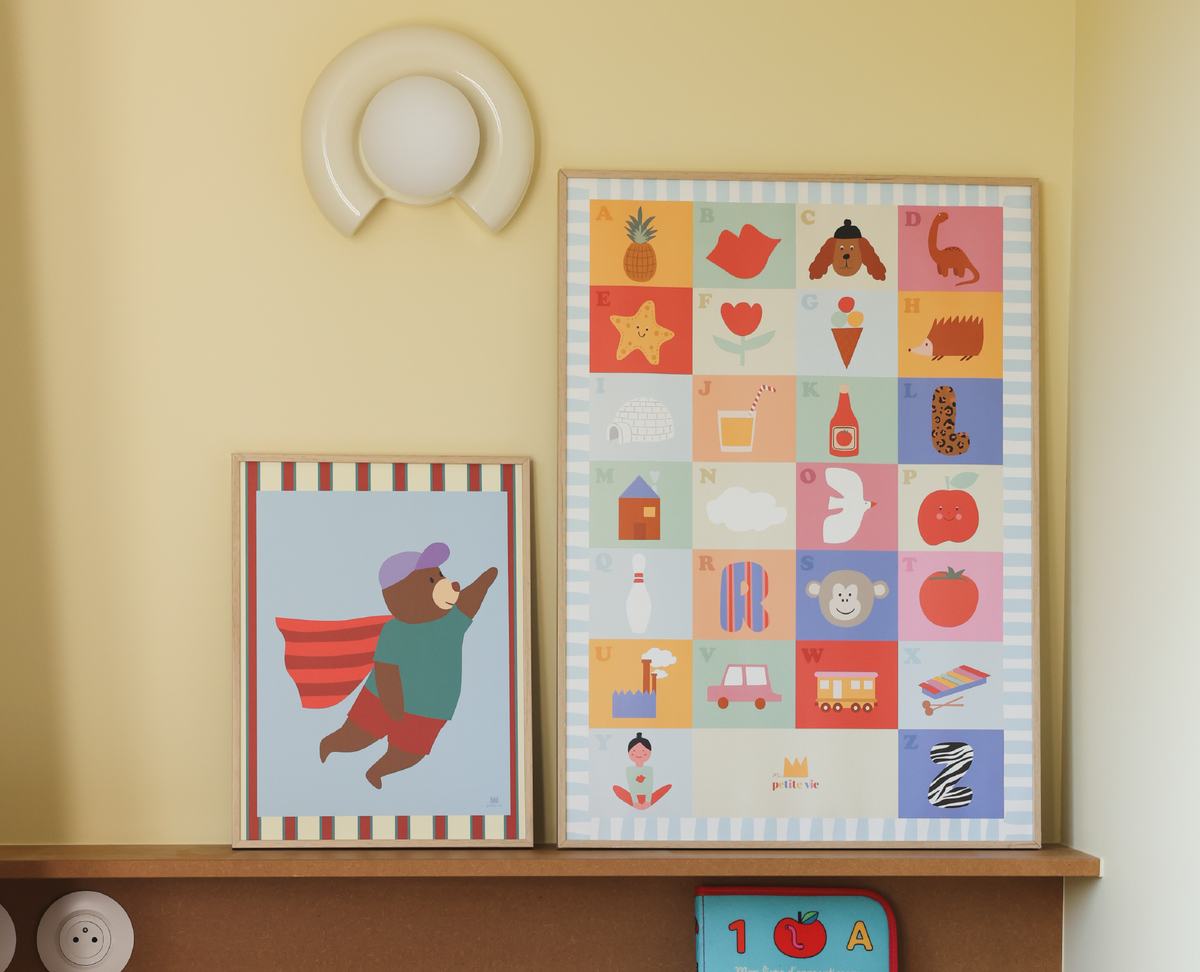
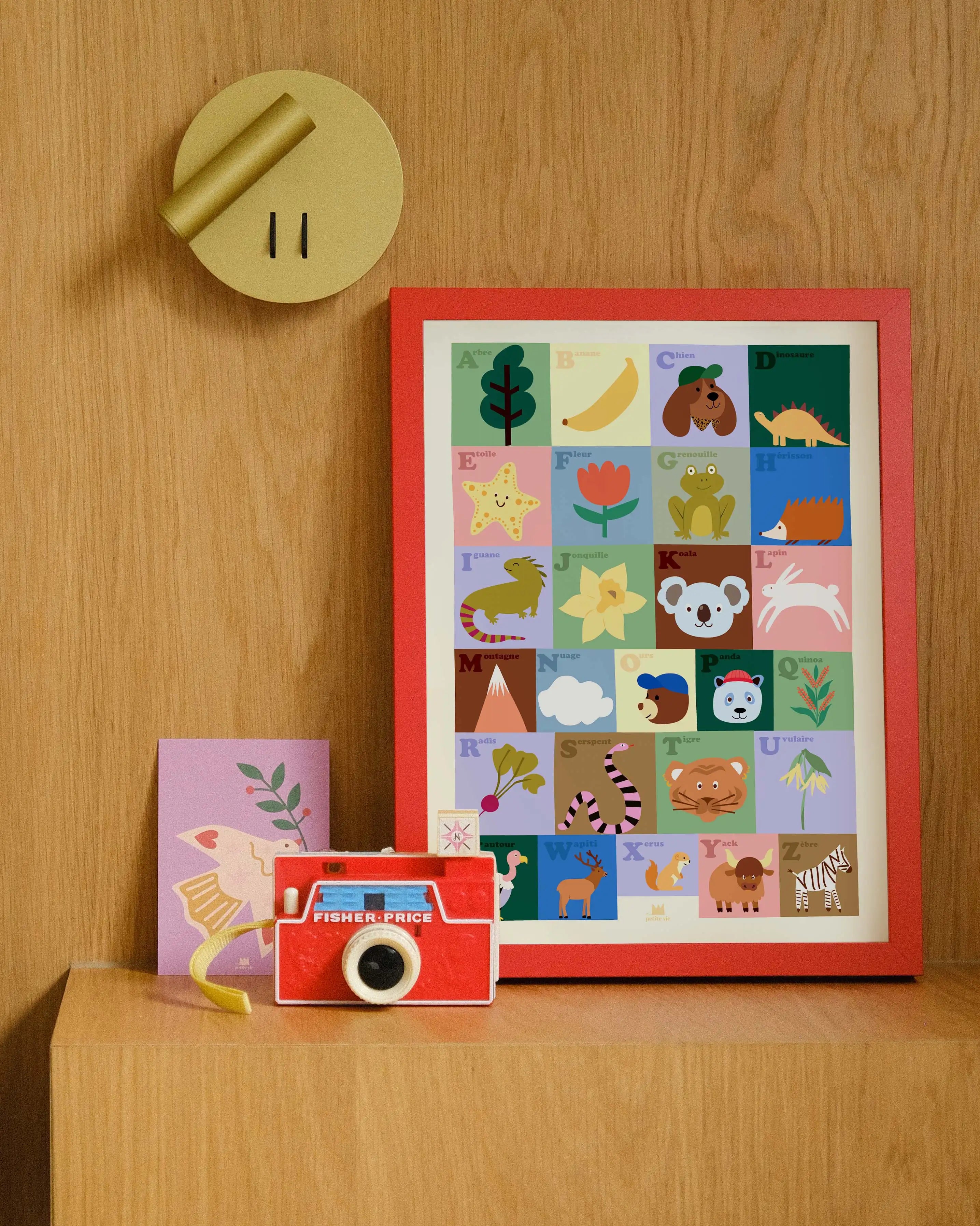
For example, an alphabet poster , where each letter is associated with an object or animal, helps children remember the letters by linking them to visual images. By reviewing the information daily, the child gradually strengthens their memorization skills. This approach makes learning easier because the information is absorbed naturally and without extra effort.
3. Promote autonomy in learning
Educational posters allow children to become familiar with concepts at their own pace. Unlike books or screens, posters are always available, ready to be explored whenever the child wants. This encourages a form of self-directed learning , where the child can regularly return to the posters to review or rediscover information.
This autonomy is beneficial for developing a child's self-confidence. For example, by having a number poster, a child can practice their numbers independently, at any time, without needing further instructions. This type of learning is all the more valuable because it shows children that they can learn and grow on their own, fostering their self-learning abilities—a skill that will be beneficial throughout their academic and personal development.
4. Create an environment conducive to education and development
Educational posters help transform a child's environment into a stimulating and enriching space . Whether it's a child's bedroom, a classroom, or even a dedicated learning corner, posters add a colorful and engaging touch that makes the space more conducive to study and intellectual development.
A visually appealing space, with posters tailored to a child's age and interests, can truly motivate and encourage their desire to learn. Posters about animals, plants, or countries of the world, for example, offer readily available subjects for observation and learning. In addition to making the child's space aesthetically pleasing, these displays create a learning environment where they are encouraged to focus and explore.
5. Encourage parent-child interaction and knowledge sharing
Educational posters are also excellent tools for fostering special moments between parents and children . These posters can be the starting point for discussions, questions, and even educational games. Parents can use the posters to explain information, ask questions of their children, or even invent stories around the topic, making learning more interactive and engaging.
For example, a poster about animals can become a question-and-answer game where the parent asks the child to name each animal and describe its characteristics. This not only reinforces learning but also fosters bonding by sharing moments of exchange and discovery. These interactions are all the more enriching as they encourage the child to develop their communication skills and ask questions, thus stimulating their curiosity and understanding of the world.
Educational posters offer a multitude of benefits for children's development and learning. By stimulating their curiosity, strengthening their visual memory, encouraging their independence, creating a supportive environment, and fostering interaction with their parents, these posters become true allies for their academic success. At Ma Petite Vie, we believe in the power of visual education to awaken children's minds and allow them to learn while having fun.
Give your child an environment conducive to intellectual development by incorporating educational posters into their living space. Whether it's discovering the alphabet, learning to count, or marveling at the wonders of nature, each poster is a gateway to a world of discovery and knowledge.
Read more
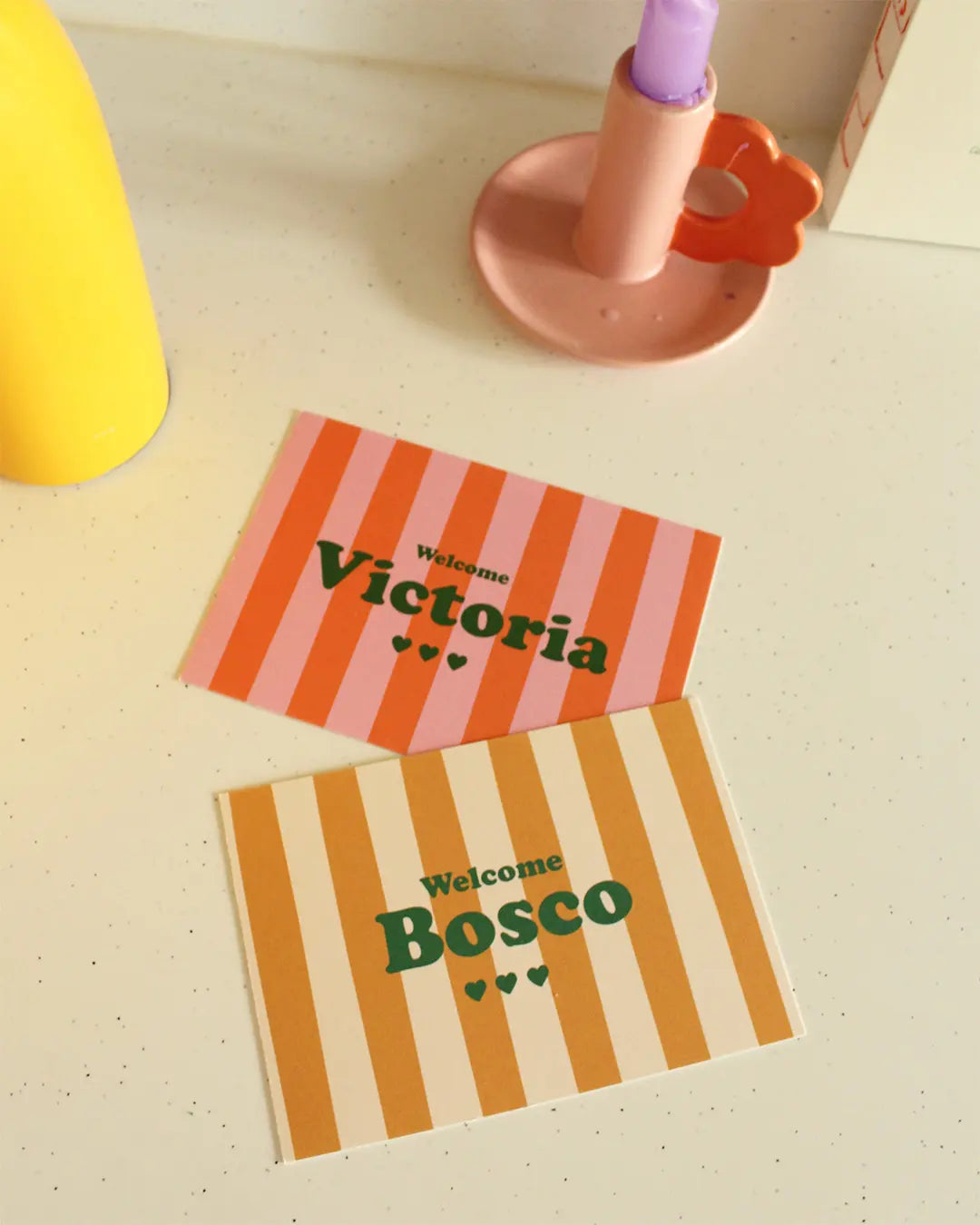
We create personalized announcements that tell your story: to celebrate a birth and make these events unforgettable memories.
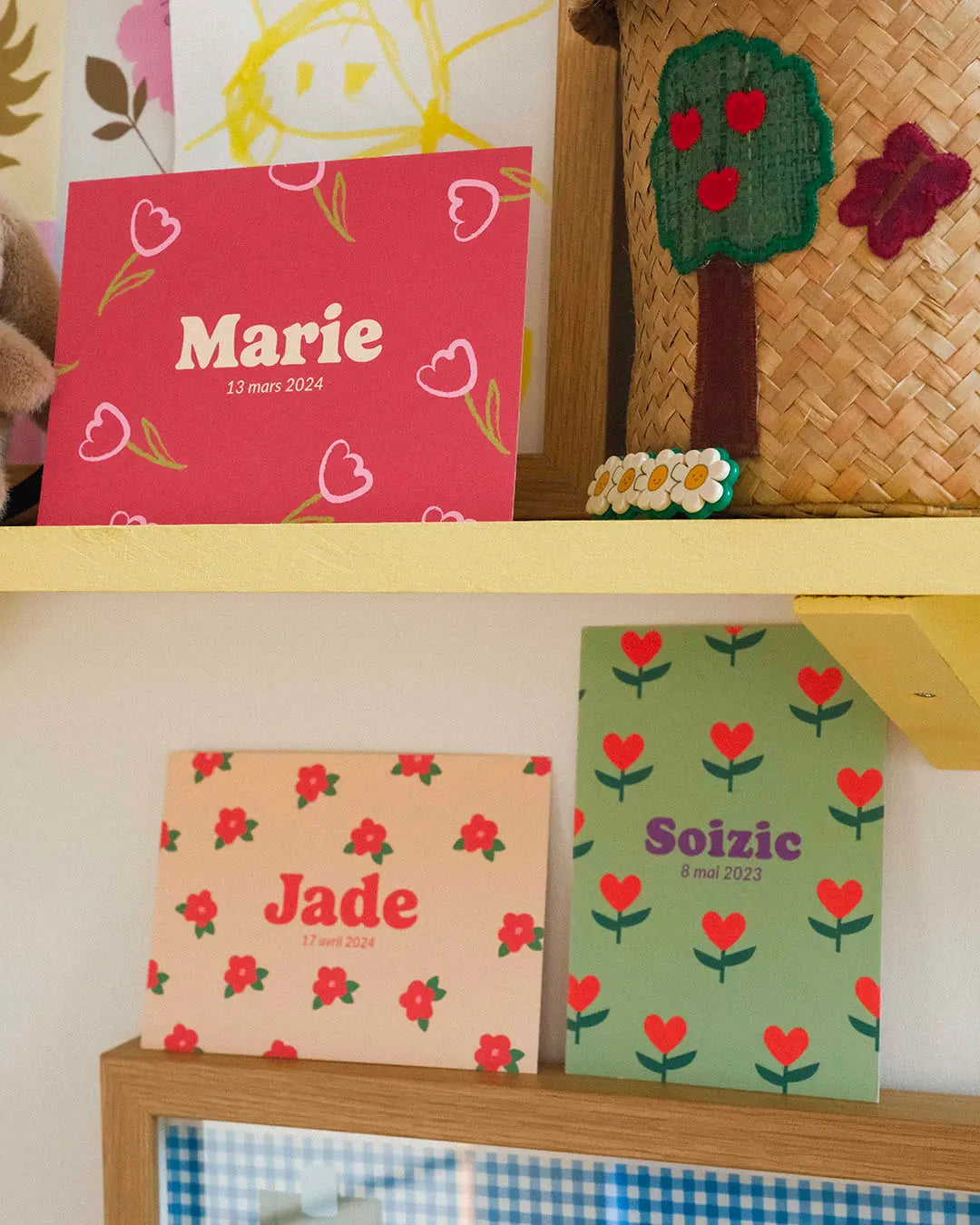
At Ma Petite Vie, we believe that every keepsake announcement deserves to reflect your story: tender, unique and timeless.