

Learning with Montessori educational posters
The Montessori method, developed in the early 20th century by Maria Montessori, has become one of the most recognized educational approaches in the world. Based on autonomy, self-confidence, and the natural development of each child, it emphasizes hands-on learning and the learning environment. With this in mind, educational posters inspired by the Montessori method are wonderful tools for encouraging children's development while respecting their individual pace. Whether you are a parent, teacher, or simply curious, let's explore how to integrate Montessori posters into everyday learning to make education visual and interactive.
1. What is the Montessori method?
The Montessori method is based on the idea that every child is naturally motivated to learn and possesses unique potential to develop. Montessori education encourages children to explore and learn independently, in an environment designed to foster their autonomy. The five main principles of the method are:
- Respect for the child : It is essential to recognize and respect the personality and individual needs of each child.
- The absorbent mind : Children have a natural capacity for absorption that allows them to easily grasp concepts and information.
- Sensitive periods : These are phases during which a child is particularly receptive to certain types of learning.
- Self-education : Montessori encourages children to learn by themselves, guided by their own interests.
- A prepared environment : The space must be organized to encourage freedom of action and learning, while promoting concentration.
These principles help to promote active, independent and confident learning in children, and Montessori posters become key elements to illustrate, stimulate and reinforce their knowledge on a daily basis.
2. The importance of educational posters in a Montessori environment
Educational posters in a Montessori environment are more than just decorations. They actively contribute to a child's intellectual, cognitive, and emotional development. In this environment, posters serve as visual aids to introduce concepts, but also to reinforce and stimulate a child's natural curiosity. An organized and aesthetically pleasing visual environment allows children to concentrate, assimilate information, and thrive.
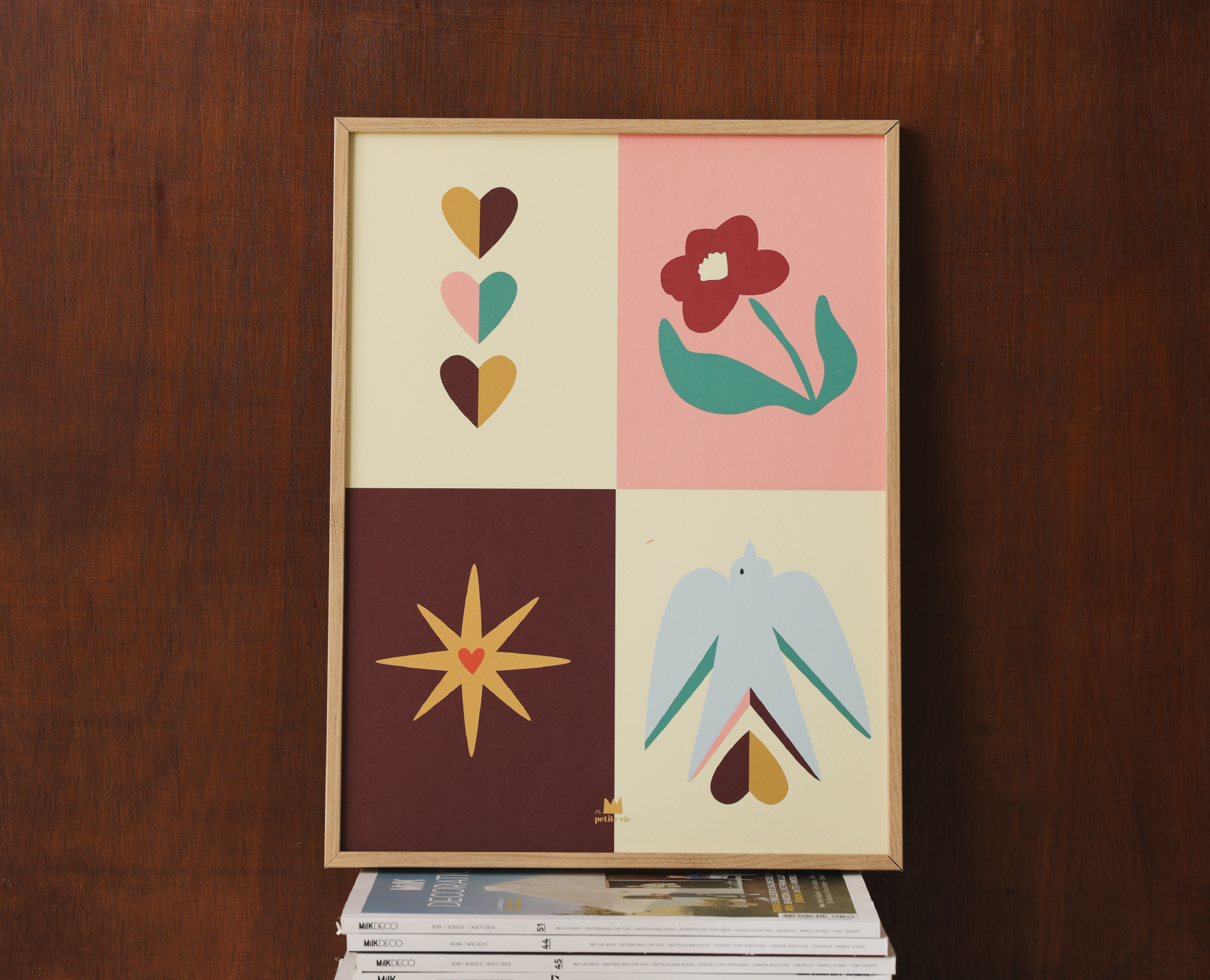
Montessori educational posters are often minimalist, clear, and aesthetically pleasing, covering a variety of themes such as animals, plants, letters, and numbers. They can be displayed in designated areas, at a child's eye level, to encourage close observation and independent learning. At Ma Petite Vie , our posters are educational and help children develop.
3. Examples of Montessori educational posters to promote learning
Montessori posters aim to simplify and clarify concepts, focusing on essential information to avoid visually overwhelming the child. Here are some popular examples of Montessori posters that can be incorporated into a learning environment:
The Montessori Alphabet Book
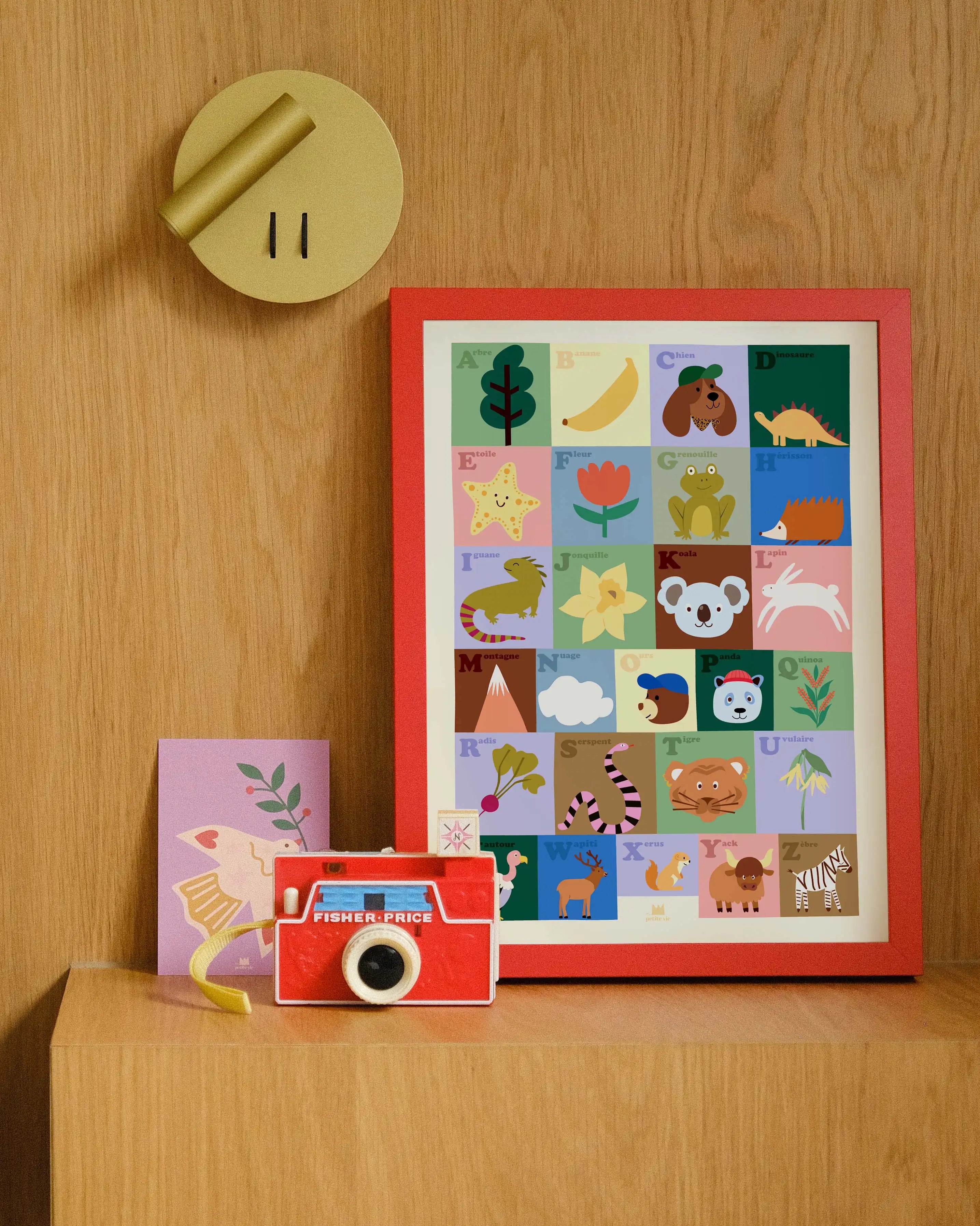
Alphabet posters , in the Montessori style, are often illustrated in a simple and uncluttered way. Each letter is accompanied by an image corresponding to an object that the child can easily recognize and name. This might be an apple for "A," a boat for "B," and so on. This alphabet encourages the child to learn the letters while associating each letter with a concrete word.
Alphabet books are particularly useful for language learning, as they encourage letter recognition and visual memory, essential skills for language development in children.
Posters about numeracy and early calculations
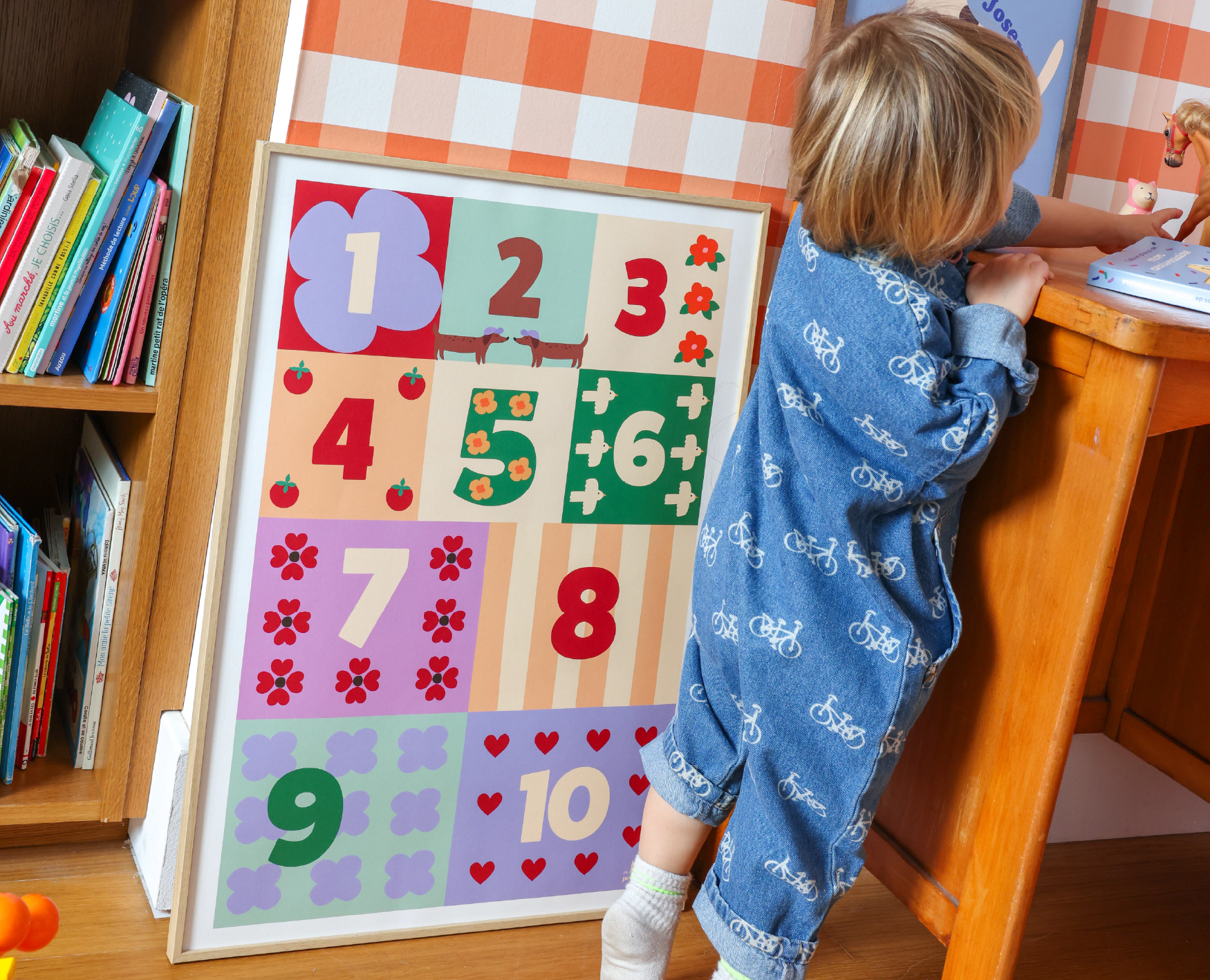
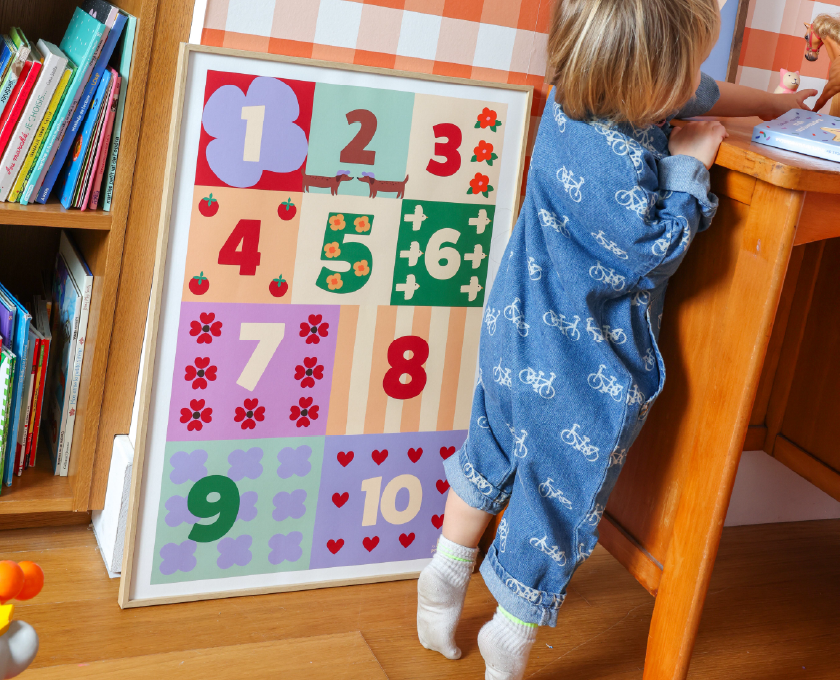
Montessori number posters are designed to help children visualize numbers and quantities. A poster of the numbers 1 to 10, for example, can represent each number with objects or items, allowing the child to make visual associations. For instance, the number “3” accompanied by three apples provides a concrete understanding of the concept of quantity.
Montessori posters for basic math, such as simple addition and subtraction, are also very popular. By visualizing simple operations, children can understand and manipulate numbers more easily, while practicing in a fun way. Our " Numbers " poster helps them develop this learning.
Posters of nature's cycles
Posters depicting natural cycles, such as the life cycle of a plant, a butterfly, or a frog, are essential to the Montessori approach. They help children understand how the world around them changes. A poster showing the transformation of a caterpillar into a butterfly, for example, sparks curiosity and illustrates concepts of transformation, growth, and time.
These posters are essential for learning about natural sciences and encourage children to explore nature, ask questions, and discover the world in a concrete and visual way.
World maps and geographical posters
Maps and geographical posters are also widely used in Montessori education. A simplified world map, with continents and oceans, helps children orient themselves and understand the diversity of the globe's regions. These posters also allow for the introduction of geographical concepts, cultural diversity, and raise children's awareness of the existence of different countries and ways of life.
Geography is a fundamental element of Montessori education, as it allows the child to develop an open mind and a curiosity for other cultures and environments.
Posters about animals and plants
Posters depicting different animal and plant species are particularly popular in Montessori environments. These posters illustrate animals or plants realistically, allowing children to easily identify them and learn their names and characteristics. A poster featuring pets, such as our " Dogs " poster, or the most common garden plants, becomes an excellent way to enrich a child's vocabulary while introducing them to biodiversity.
These posters also stimulate the development of general knowledge and encourage children to respect and appreciate nature.
4. How to use Montessori posters to maximize their impact
Montessori posters are most effective when integrated into a structured and organized space, where each tool has a specific function. Here are some tips to optimize the use of these posters:
- Eye level : Place the posters at the child's eye level so that they can observe them closely without difficulty.
- A clean environment : Use posters sparingly, without visually cluttering the space. A well-organized wall with a few key posters is more effective than a wall saturated with images.
- Linking posters to practical activities : For example, a numbers poster can be linked to cubes or beads so that the child can associate numbers with concrete objects.
- Promote autonomy : Encourage the child to ask questions about the posters and to explore them on their own to strengthen their curiosity and self-learning.
Montessori posters: an asset for visual education
Educational posters inspired by the Montessori method offer children a visual and playful approach to learning. Whether it's learning numbers, discovering nature, or getting an introduction to geography, each poster plays a unique role in facilitating independent learning and developing a child's visual memory. At Ma Petite Vie , we offer Montessori-style posters to provide children with a stimulating environment where each image becomes a gateway to new discoveries.
Read more
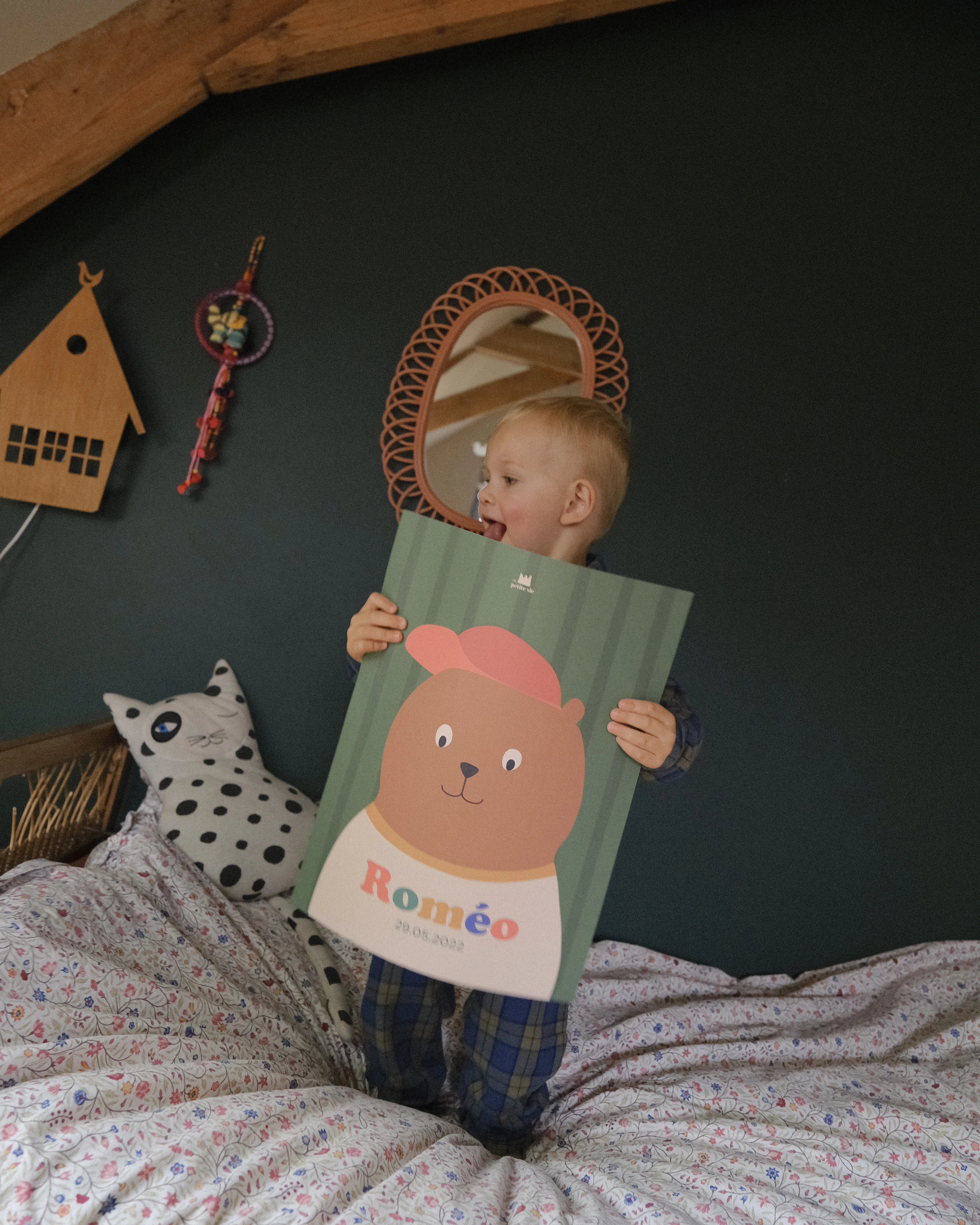
Ready to give an unforgettable Christmas? Discover our collection now and personalize your gifts for a magical moment.
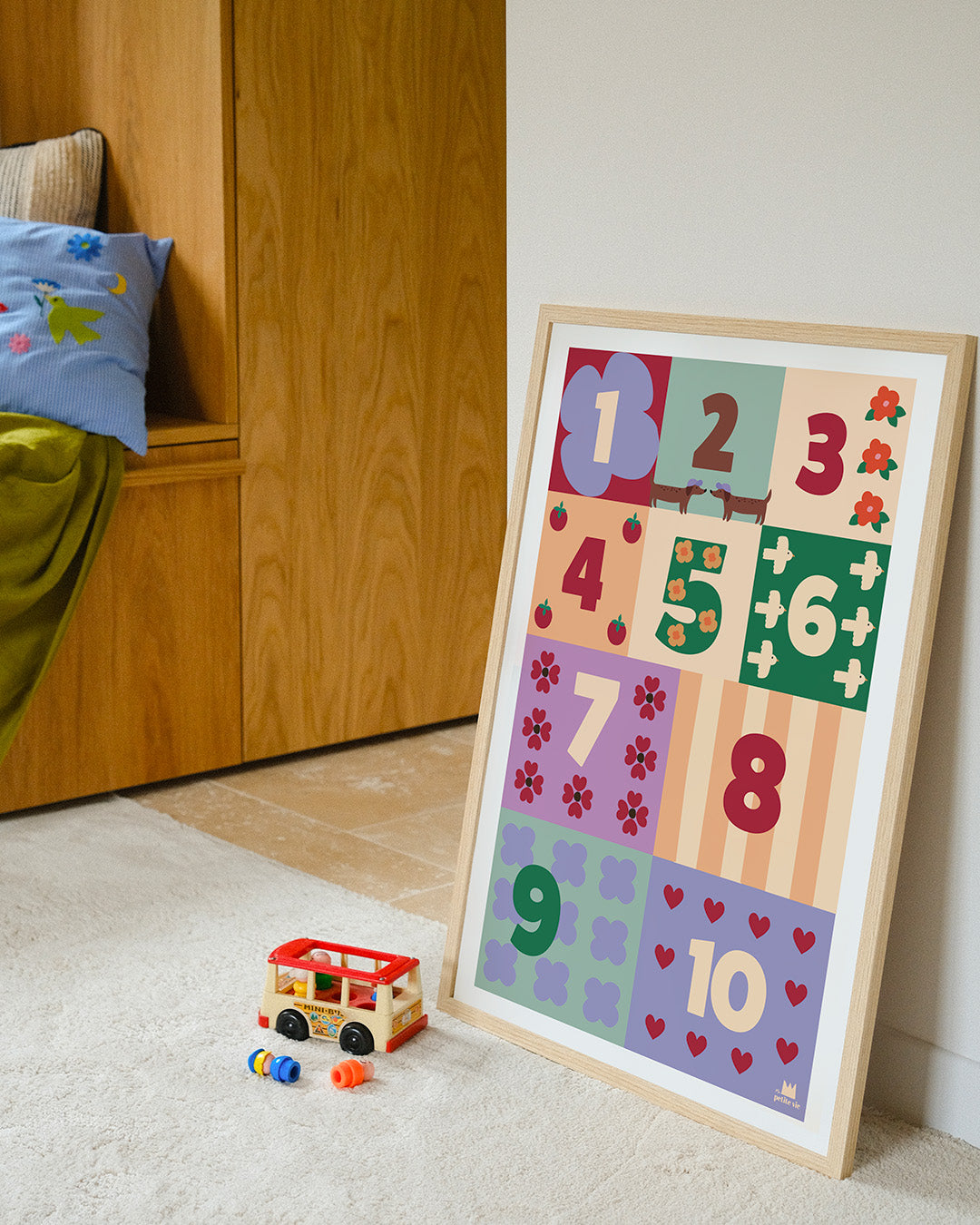
Decorative posters allow you to personalize the room with softness and simplicity.