

Educational poster: the complete guide to choosing the right one based on your child's age, theme, and decor
Why an Educational Poster Truly Makes a Difference
You've probably noticed that your child remembers things without being formally "taught." That's exactly what our selection of educational posters does: it leverages this natural mechanism of visual immersion. A child who sees the same letters, shapes, or numbers every morning will eventually integrate them without conscious effort. This is called implicit repetition, and it's incredibly effective, especially between the ages of 2 and 7.
What has changed in recent years? Design. An educational poster is nothing like the school charts of the 80s. Creators have understood that an attractive visual captures attention much better than a stark support. The result: the best educational posters for children now play a dual role. They teach, yes, but they also decorate the room with style. It's this unique blend that makes them so interesting, and you'll see that choosing the right one requires some simple consideration.
Choosing by Age: The Right Content at the Right Time
This is the first question every parent asks. And it's the right question. A 2-year-old's brain is not the same as a 7-year-old's. An effective learning poster is above all a poster adapted to your child's cognitive stage.
18 Months to 3 Years: Stimulating the Senses
At this age, children explore the world through their eyes and fingers. Visuals should be simple, high-contrast, with few elements per image. Ideal themes: primary colors, geometric shapes, familiar animals. No need for complex text; the image alone is enough to foster awakening.
3 to 6 Years: The Golden Age of Educational Posters in Kindergarten
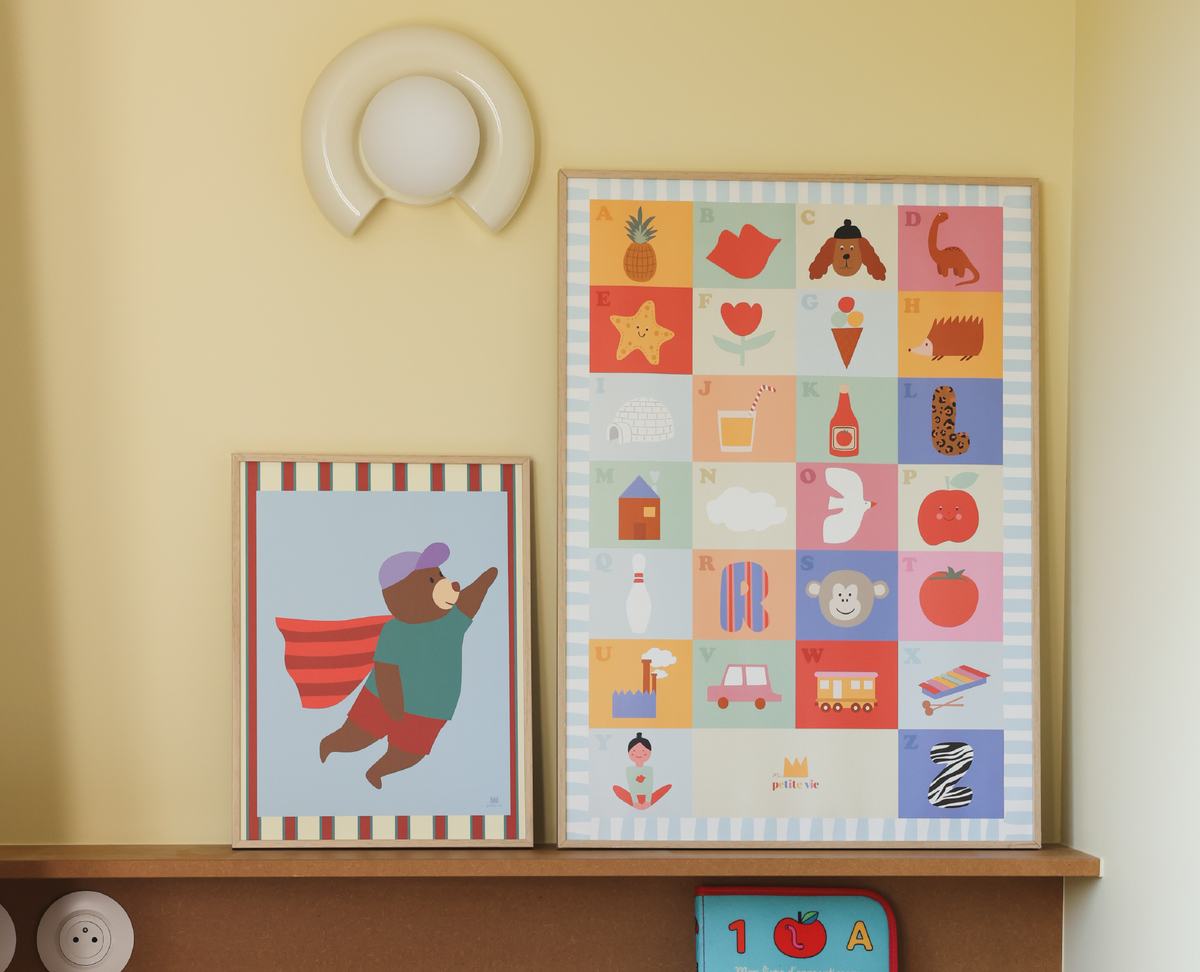
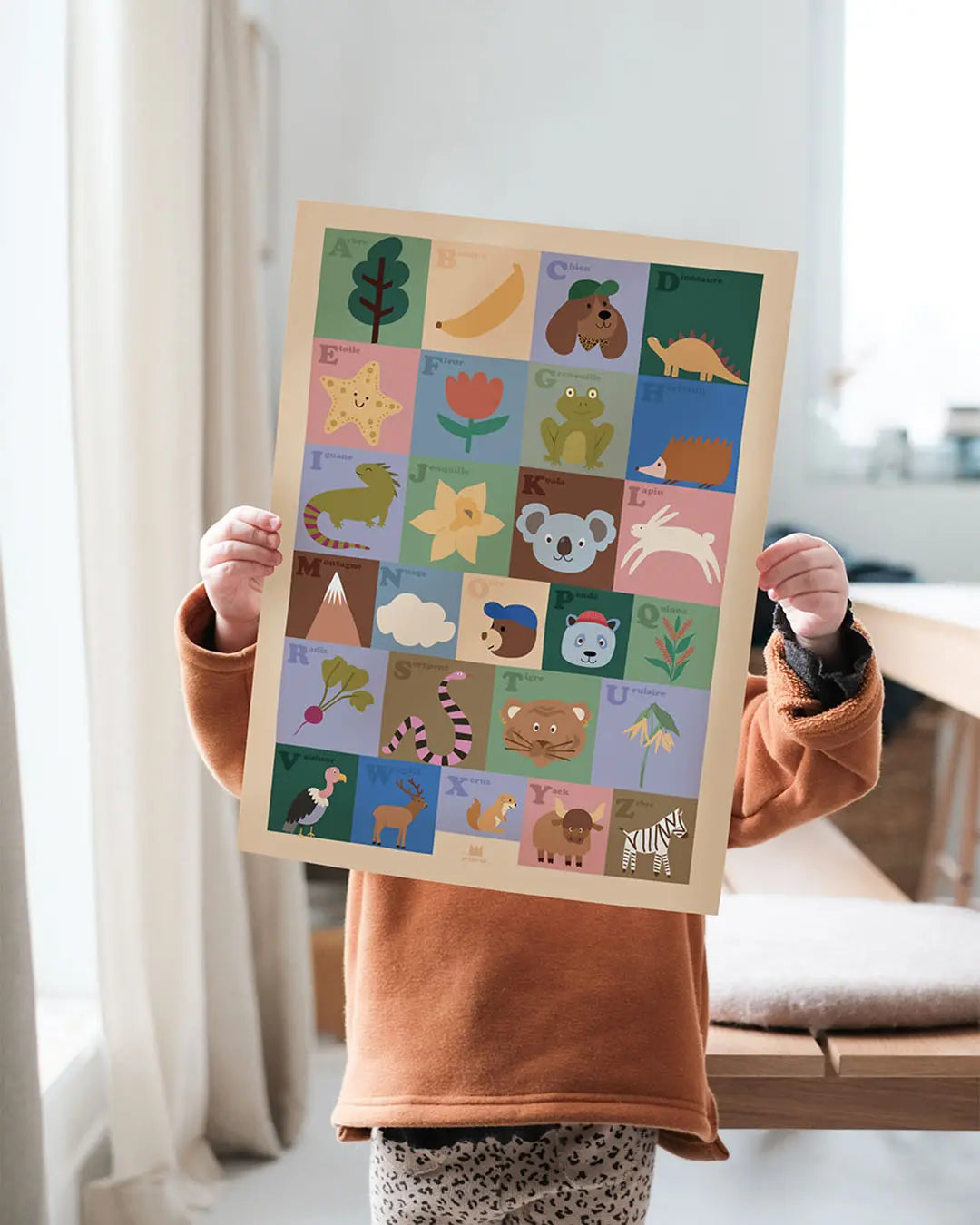
This is the richest period for a kindergarten educational poster. Children begin to recognize letters and numbers, to show interest in animals and nature. A large alphabet chart with illustrations becomes a daily play tool: pointing to letters, naming illustrations, inventing stories. It's concrete, joyful, and truly useful.
6 to 9 Years: Towards More Structured Content
Children are in first or second grade. They are consolidating their learning. A poster dedicated to multiplication tables hung in their room becomes a natural daily aid. World maps, botanical charts, or natural science diagrams also foster genuine intellectual curiosity.
Must-Have Themes and Those That Stand Out
Let's be frank: some themes have proven their worth for decades, and others will surprise you with their originality. Both have their place in a well-designed child's room.
Timeless classics: the alphabet chart, numbers, and animals remain the pillars of any collection. They meet universal needs and transcend generations without aging. It's no coincidence that they are always bestsellers.
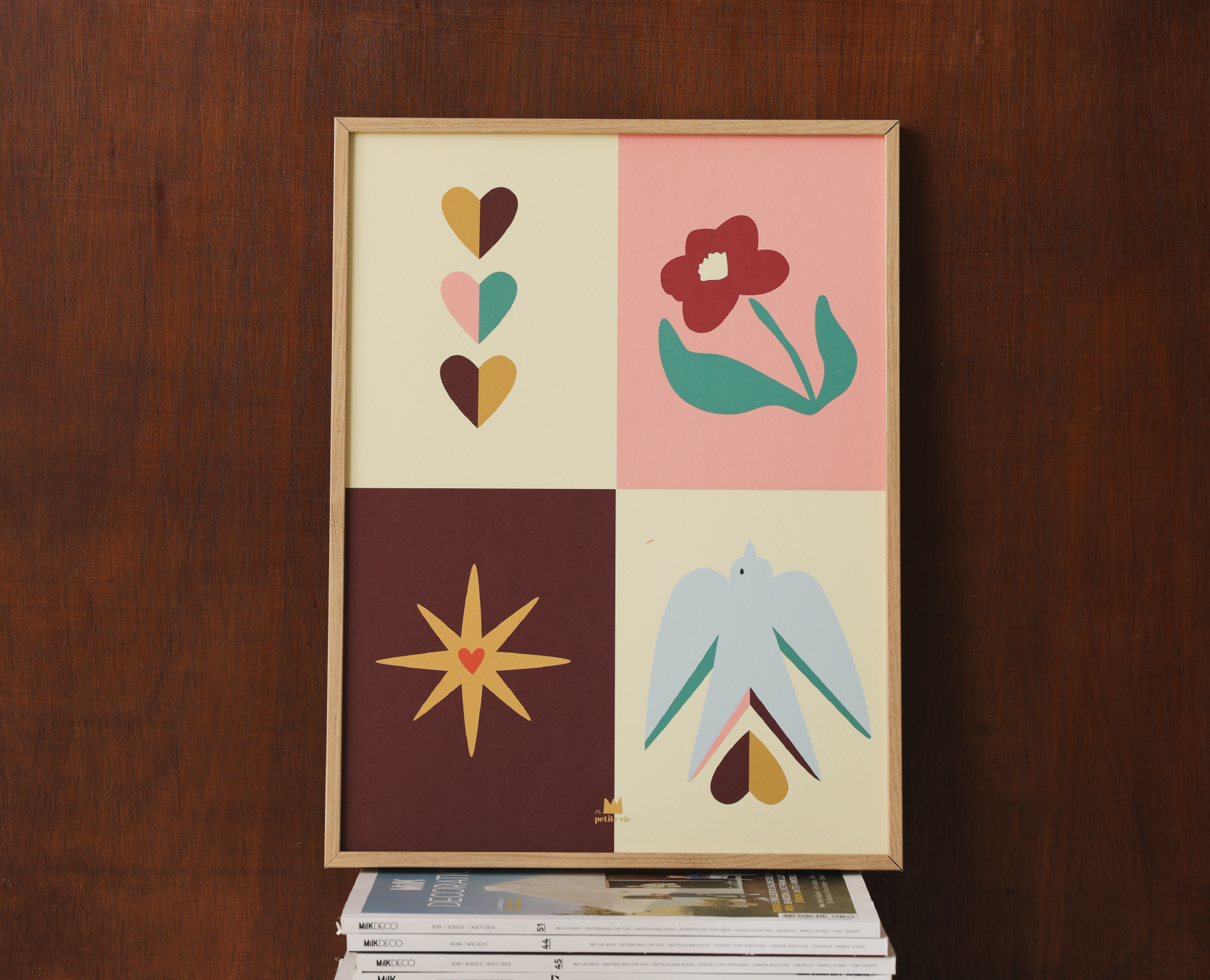
When it comes to themes that stand out, that's where it gets really interesting. Dinosaurs, for example, are perfect for children passionate about natural sciences and provide a fun entry into biology. A botanical-themed educational poster is perfect for a room with natural tones and gently introduces children to the plant world. Vintage universes appeal to parents who like retro graphics. And for children with character, a high-quality large poster with a modern and assertive style checks all the boxes: it decorates, it inspires, it reflects your child's personality.
The most important advice remains: choose a theme that your child truly loves. A poster they revisit every day is an educational poster that truly works. Spontaneous interest is the best learning driver there is.
Integrating the Poster into the Room Decor Seamlessly
Here's an aspect many guides ignore: the poster must also integrate into the room. Because a beautiful room contributes to the child's well-being as much as to the parents'. Here are three concrete profiles to help you make the right choice for children's room decor.
- Natural and soft room (beige tones, wood, white linen): opt for botanical posters or animal illustrations in pastel colors. The result is calming and cohesive.
- Colorful and playful room: a brightly colored alphabet chart or a graphic number chart will add dynamism and energy without overwhelming the space.
- Modern and graphic room: favor educational posters with strong typography or a minimalist style. The effect is immediate and sophisticated.
Also consider the format. A large poster on a large wall makes a real visual impact. On a small wall or in a hallway, a standard poster is perfectly sufficient. And for hanging height, here's the trick few people know: place the center of the poster at your child's eye level, about 80 to 110 cm (31 to 43 inches) from the floor. This is the height at which they will naturally observe it. To go further in decor, our home & lifestyle range offers elements that pair perfectly with the posters.
How to Make the Right Choice: A 3-Question Summary
Before buying, ask yourself these three simple questions. They cover 95% of cases.
1. How old is my child and what are they sensitive to? A 2-year-old and an 8-year-old do not have the same visual needs or interests. Age is your main compass.
2. What learning do I want to support right now? Reading, numeracy, scientific curiosity... Each educational poster addresses a different objective. Be precise about what you're looking for.
3. Will the poster integrate well into the room? Colors, style, format: check that the chosen educational poster harmonizes with the rest of the room.
To explore all available options and find the poster that perfectly suits your child, the educational posters collection brings together the entire selection, organized by theme and age.
Frequently Asked Questions About Educational Posters
At what age can you start hanging an educational poster in a child's room?
As early as 18 months, with simple and colorful visuals. At this age, children begin to point and name what they see. A clear and high-contrast visual is enough to stimulate their visual awakening daily.
What's the difference between a large poster and a standard poster?
A large poster creates a significant decorative effect on an empty wall or a large wall section. A standard poster is better suited for small spaces, alcoves, or composed frame galleries. The choice primarily depends on your available space.
Does an educational poster truly help with learning the alphabet or numbers?
Yes, through daily visual repetition and spontaneous parent-child interactions. Children memorize without conscious effort by seeing the same cues every day. This is the principle of immersion, natural and effective.
How to hang a poster without damaging the walls?
Repositionable adhesive strips (like Command strips) are ideal for lightweight posters. For large posters, a thin frame secured with two screws remains the strongest and most visually clean solution.
Read more
Wedding invitations: style, actual budget, sending timeline and personalization. The complete guide to making sure you don't miss anything in this key step.
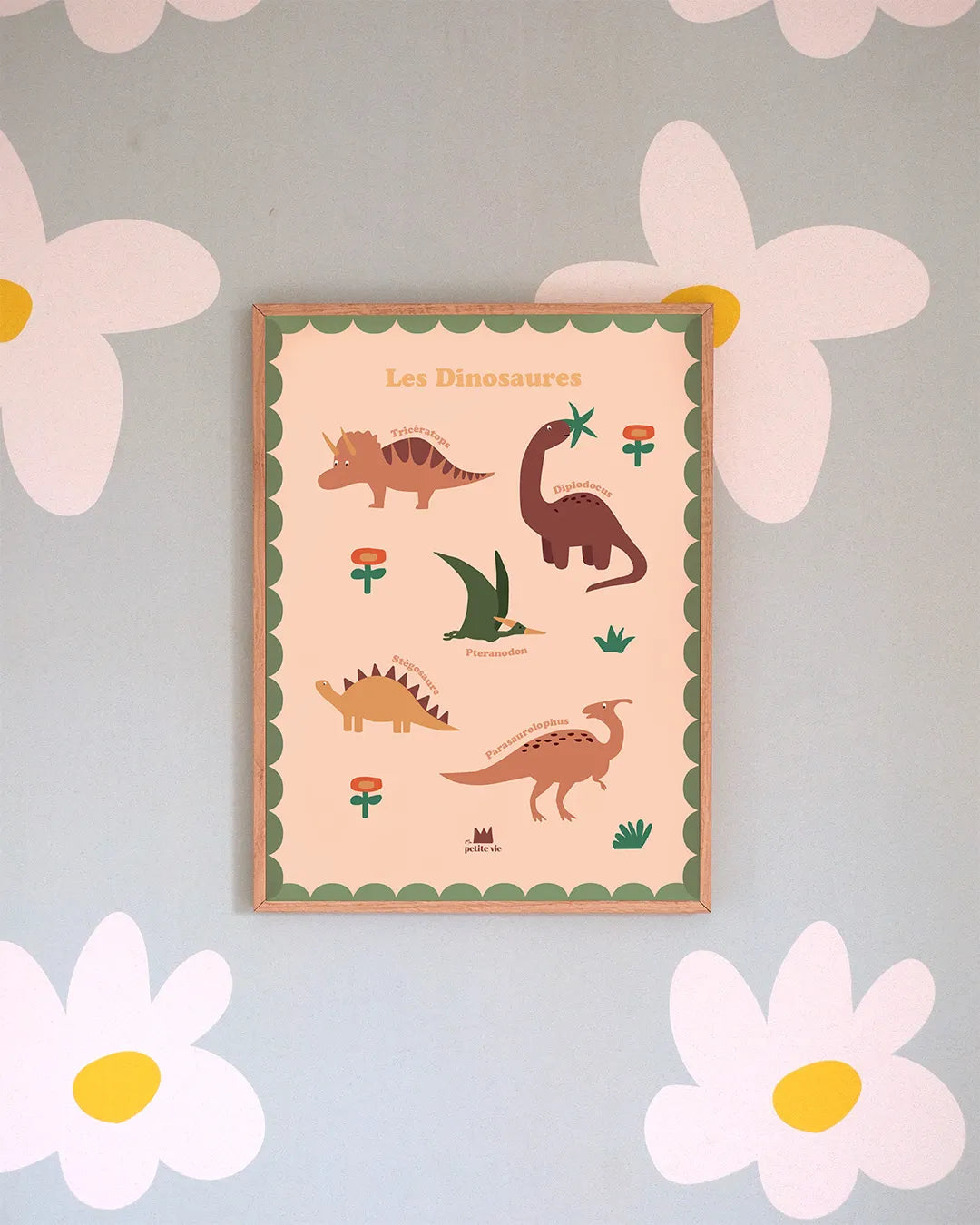
Discover how to decorate a preschool classroom zone by zone: door, gathering wall, reading corner. Educational posters, tips, and fun ideas.